
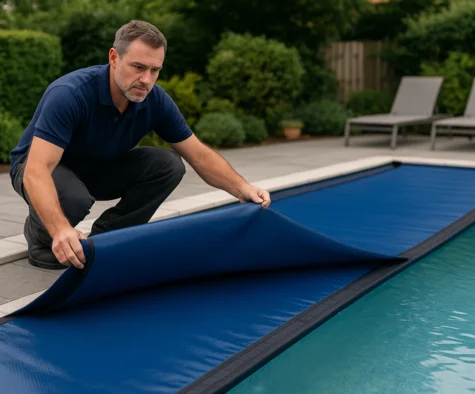
Do Swimming Pool Covers Prevent Algae Growth?

Jasper Smith
April 6, 2026
Ever noticed that slimy green film creeping across your pool? Algae can turn your sparkling oasis into a murky mess quickly. But here’s the good news: a simple cover might be your best defence. Let’s explore how pool covers work their magic against unwanted algae growth.
How Pool Covers Block Algae Development
Algae need three things to thrive: sunlight, warmth, and nutrients. Pool covers in Mont Albert effectively cut off the sunlight that algae spores desperately need. Without light, photosynthesis cannot occur, stopping algae in its tracks. Covers also reduce water evaporation, which helps maintain proper chemical balance. This consistent chemistry makes it harder for algae to establish itself.Types of Covers and Their Effectiveness
Not all covers offer the same level of algae prevention. Swimming pool covers in Glen Iris come in various materials and styles. Solid covers block nearly all sunlight and work brilliantly against algae. Mesh covers allow some light through but still reduce growth significantly. Solar covers trap heat while limiting light penetration to deeper water layers. The darker and more opaque your cover, the better algae resistance you’ll achieve.Additional Benefits Beyond Algae Control
Pool covers in Kooyong do more than just fight algae growth effectively. They keep debris like leaves and dirt out of your water. This means fewer nutrients for algae to feed upon. Covers also reduce your chemical consumption by up to 60 per cent. Less chlorine degradation occurs when UV rays cannot reach the water. You’ll save money on both chemicals and heating costs throughout the year.
Best Practices for Maximum Protection
Using your cover correctly maximises its algae-fighting power considerably. Pool covers in Oakleigh should be cleaned regularly to prevent contamination. Remove standing water from the top to avoid bacterial growth. Always maintain proper water chemistry even when your pool is covered. Test and adjust pH levels and sanitiser weekly at a minimum. A well-maintained cover combined with good chemistry creates an inhospitable environment for algae.When Covers Aren’t Enough
Sometimes algae still appear despite using a quality cover consistently. This usually indicates underlying water balance issues that need addressing. Check your filter system to ensure it’s working at optimal efficiency. Shock your pool if you notice any algae blooms forming. Consider using an algaecide as additional protection during warmer months.Conclusion
Pool covers are powerful tools in preventing algae growth naturally and effectively. They block sunlight, maintain chemical balance, and reduce debris accumulation substantially. Combined with proper pool maintenance, covers keep your water crystal clear. Ready to protect your pool from algae year-round? Contact The One Pool Heating today for expert advice and solutions. Call us at 0399687627 or email [email protected]. Visit https://theonepoolheating.au/ to discover how we can help maintain your pristine pool.FAQs
- Do pool covers completely eliminate algae growth?
- How often should I clean my pool cover?
- Can I use a pool cover year-round?
- What colour cover works best against algae?
- Will a cover affect my pool’s chemical levels?
- How long does a quality pool cover last?
- Can algae grow on top of the cover?
- Do solar covers prevent algae as effectively as solid covers?
- Should I shock my pool before covering it?
- Can I cover a pool with existing algae?